

01
Pain-Point-Driven Topic Ideation
Ask Chat to generate blog topics directly from customer pain points extracted across your calls. Every suggested topic maps back to a real problem that real customers described — no guessing required.

A customer-led workflow
Build a systematic content engine powered by real customer conversations — so every blog post, social thread, and email campaign is grounded in problems your audience is already feeling.
Customer evidence

“Citations in reports are critical for us. They build trust and prove accuracy — when leadership sees top citations, it reinforces credibility.”
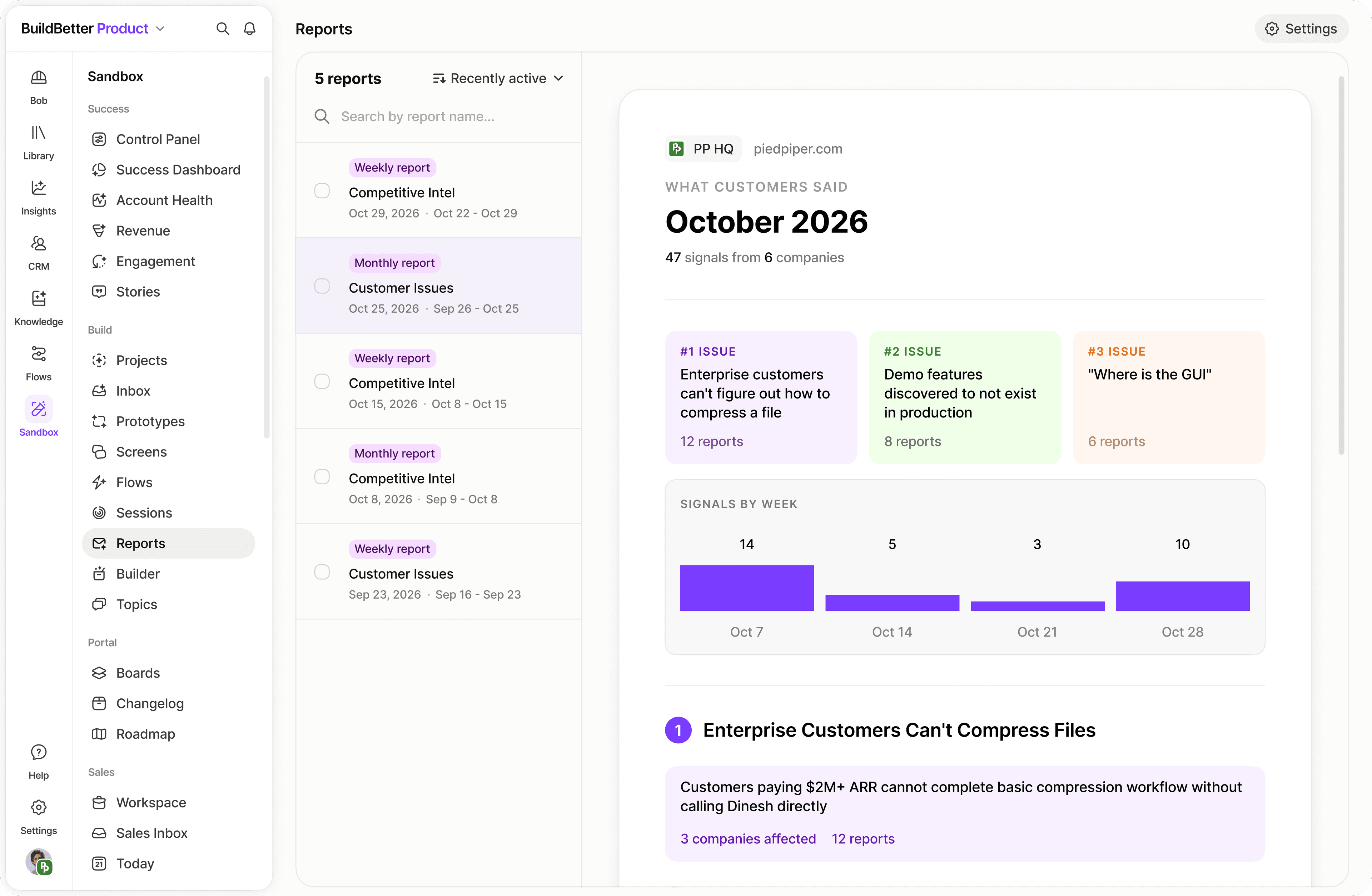
Ask a specific question of your company context. Inspect the accounts and source material behind the answer before using it in a report or a team decision.
01
Ask Chat to generate blog topics directly from customer pain points extracted across your calls. Every suggested topic maps back to a real problem that real customers described — no guessing required.
02
Customers ask questions on calls that they also search for online. BuildBetter surfaces recurring questions and objections that become high-intent, low-competition content opportunities.
03
Filter Signals for success moments, specific outcomes, and ROI mentions. Each one is a ready-made customer story for a blog post, case study, or social thread — already written in the most compelling language possible.
04
Generate a 90-day content calendar by querying Chat across your call library. Map pain points to formats (blog, video, email, social) and get a full quarter of ideas in under an hour.
05
Pull recurring objections from Signals and turn each one into a piece of content that addresses it directly. FAQ pages, ROI calculators, and comparison articles built from real buyer concerns outperform generic content on every metric.
06
Analyse trends across dozens of calls to identify shifts in buyer psychology, emerging pain points, and patterns no analyst report has yet captured. Your conversation data is original research.
Go to Signals, set Type = Problem, and read through the full list. Look for pain points that appear three or more times — those are your highest-demand content topics.
Query: 'Based on customer conversations, what are 10 blog topics that would resonate with our ICP?' Every topic returned maps to a documented pain point, not a guess.
Query: 'What questions do prospects and customers ask most often on calls?' These questions are both content angles and SEO keywords — the exact phrases people type when they feel the problem.
Filter Signals by Type = Praise, Sentiment = Very Positive, and look for mentions of specific outcomes, numbers, or ROI. Each one is a customer story ready to be developed.
Acute frustrations work well as problem-awareness blog posts. Success stories become case studies and social threads. Recurring questions become FAQ or educational content.
Query: 'Build a 90-day content calendar for our blog based on customer pain points and success stories. Include topic, format, and the customer insight it's based on.'
Topics rooted in pain points mentioned by seven or more customers should lead your calendar — they have the highest potential to resonate with your widest audience.
Use the 'problem to solution' framework: open with the customer's exact language describing the pain, then show how BuildBetter addresses it. Real quotes in the intro outperform any hook you'd write from scratch.
Turn a single success story into a thread: the problem in their words, the moment it changed, the specific outcome. Authentic specificity (12 hours/week saved, not 'significant time savings') drives engagement.
Pull the top three objections from lost deal calls. Build a nurture sequence that addresses each one directly, using the language prospects use to raise the objection — which is also the language that defuses it.
Query: 'What new patterns or shifts have emerged in customer conversations over the past quarter?' Use the output as the basis for an original data-backed opinion piece. Your call library is research no competitor has.
Review two to three new sales calls. Note any new language, pain points, or success stories. Add them to your quote library and content backlog.
Deep-analyse the past month's calls, update the 90-day calendar with new topics, and archive content ideas that are no longer aligned with current ICP pain points.
Run a cross-call analysis to identify market-level trends. Write one original research-backed piece per quarter that only your team could produce.
Bring a real question. We’ll walk through the context and the next step together.
Book a demo