

Introducing
Artificial Business Intelligence
AI wasn't an afterthought. BuildBetter was one of the first B2B GPT-powered tools back in 2020, and we're building the first ABI.

We bet in 2020:
Remote and hybrid work would create an unprecedented data set. For the first time, every customer call, every internal conversation, every decision would be captured—turning company activity into company knowledge.
AI would get good enough to solve real business intelligence problems, answer meaningful questions, and reduce operational work by at least 70%.
The businesses that survive will be customer-led. As AI raises the bar, only organizations that truly listen and respond to their customers will thrive.
Everyone claims to be different.
We have receipts.

First (GA) GPT powered B2B Saas tool for teams
First GPT powered call summaries
First GPT powered product documentation tool
First privacy focused features for embedding data into LLMs
First unified analysis engine with cite-able extractions (Signals)
First MCP powered qualitative analysis tool
First automated close the loop workflows
First fully agentic analysis tool with the largest qualitative context window
First fully agentic qualitative analysis chat with MCP access
First vibe building tool for reports, workflows and dashboards
First (GA) GPT powered B2B Saas tool for teams
First GPT powered call summaries
First GPT powered product documentation tool
First privacy focused features for embedding data into LLMs
First unified analysis engine with cite-able extractions (Signals)
First MCP powered qualitative analysis tool
First automated close the loop workflows
First fully agentic analysis tool with the largest qualitative context window
First fully agentic qualitative analysis chat with MCP access
First vibe building tool for reports, workflows and dashboards
Defining Artificial Business Intelligence
ABI is an AI's ability to perform emergent business tasks as well as it's ability to interact with the world independently of intervention by other intelligence. This doesn't have to be "superintelligence," could just be Tom, from accounting.
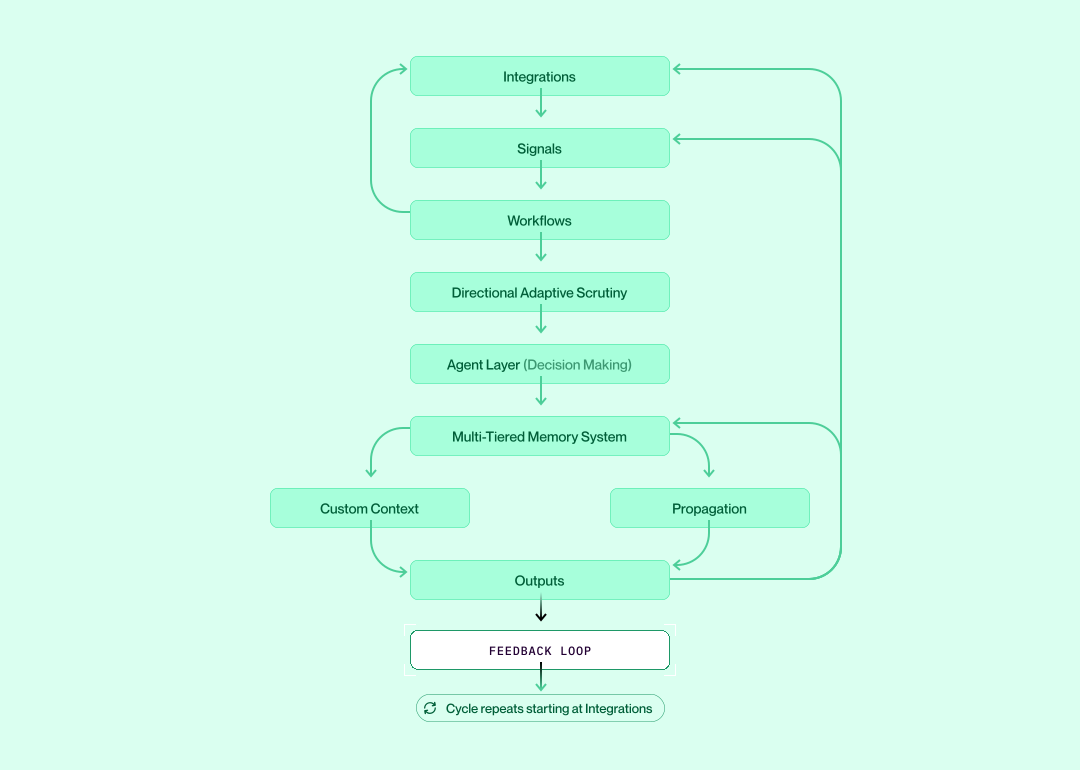
Directional Adaptive Scrutiny
The interplay between environmental challenges and dynamic cultural (company) scrutiny, which together create a unique evolutionary pressure that drives adaptation and innovation.
Multi-tiered Memory System
A more human-like memory system with short-term, medium-term, and long-term memory capabilities, along with the ability to selectively forget and compress knowledge, enabling faster adaptation and decision-making without being paralyzed by perfect recall or the "Burden of Knowledge."
Propagation
Specialization through division rather than multiplication, promoting efficiency and adaptability by refining specific tasks instead of creating unnecessary complexity or generalization.
These key pillars are what we believe can create ABI
Directional Adaptive Scrutiny
A dynamic feedback loop where the AI continually adapts its decisions by weighing both environmental challenges and cultural (company) shifts—just like how we adjust our choices based on the world around us.
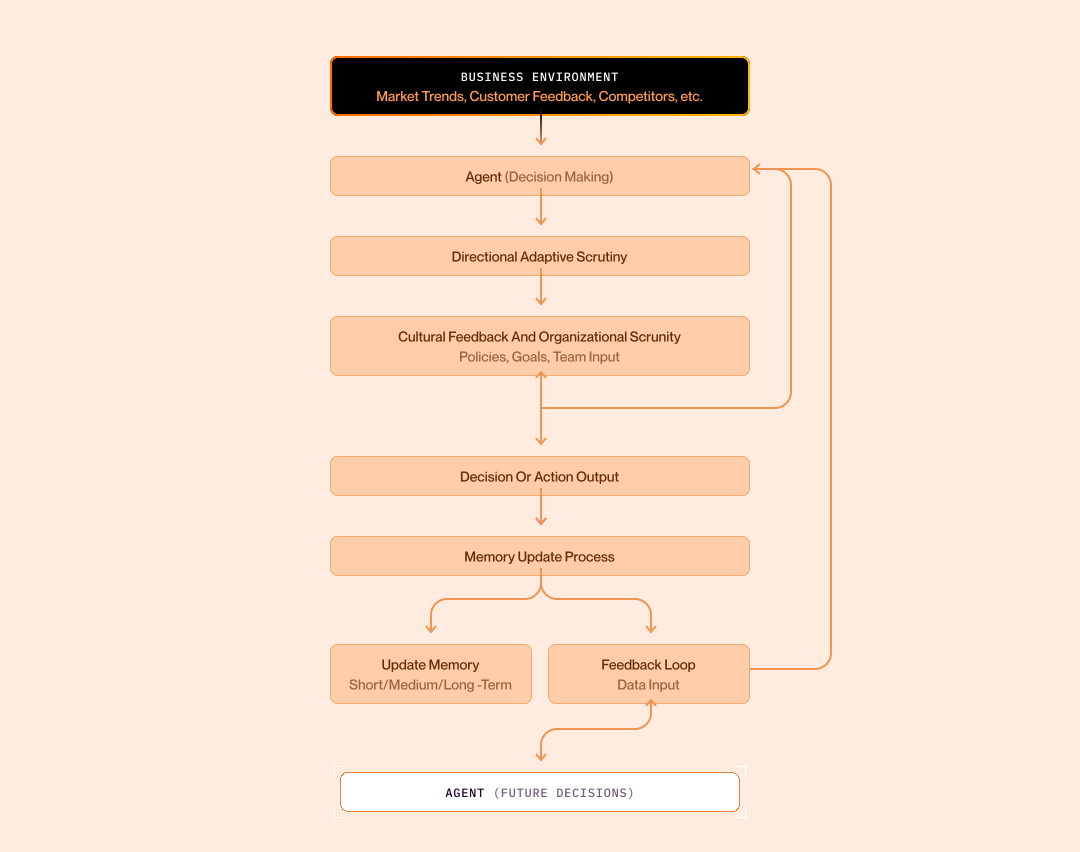
Environmental Variability
The diverse, cyclical, and sometimes extreme conditions that challenge a system, providing the impetus for adaptation and innovation.
Dynamic Selection Criteria
Ever-changing standards for evaluating the success or failure of adaptations, analogous to shifting cultural preferences or evolving fitness landscapes in nature.
Recursive Feedback Loops
Self-reinforcing cycles where the outcomes of adaptations influence both the environment and the selection criteria, leading to continuous refinement and meta-learning within the system.
Multi-tiered Memory System
Imagine an AI memory that works like ours, with short-term, medium-term, and long-term layers—letting it learn quickly, adapt swiftly, and make smart decisions without getting swamped by too much information.
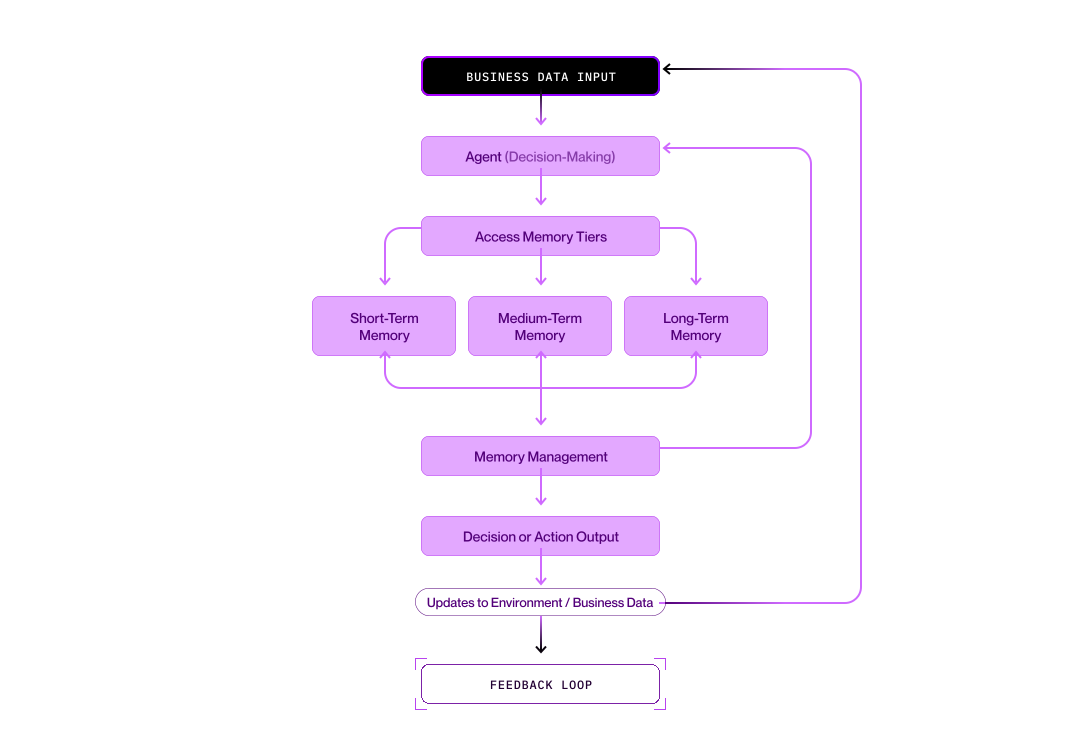
Multi-tiered Memory System
■ Short-term memory (RAM), Medium-term memory, Long-term memory ("Lava")
Adaptive Learning and Forgetting
■ Ability to quickly learn from new situations
■ Selective forgetting and compression of information
■ Balancing perfect recall with the "Burden of Knowledge"
Contextual Decision Making
■ Utilizing different memory types for different decision contexts
■ Balancing rationality with intuition
■ Adapting decision-making processes based on the specificity and criticality of information
Propagation
Propagation involves the agent creating specialized sub-agents through division when necessary—specifically for repetitive or novel and high-risk tasks—to enhance efficiency and adaptability by refining specific tasks rather than adding unnecessary complexity.
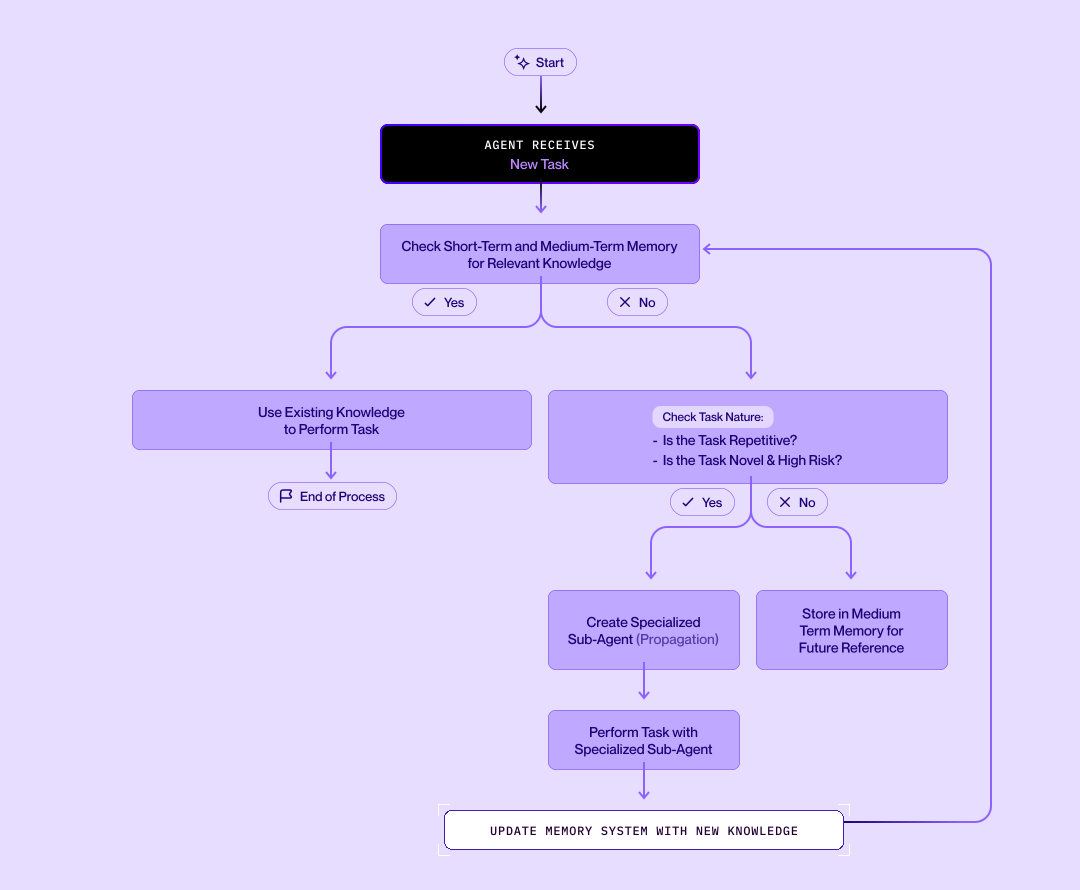
Repetitive Task Specialization
■ Short-term memory (RAM), Medium-term memory, Long-term memory ("Lava")
Risk Management
■ Ability to quickly learn from new situations
■ Selective forgetting and compression of information
■ Balancing perfect recall with the "Burden of Knowledge"
Propagation Decision
■ Utilizing different memory types for different decision contexts
■ Balancing rationality with intuition
■ Adapting decision-making processes based on the specificity and criticality of information
BuildBetter Business Intelligence Flywheel
By capturing not just what your customers say but also what your team contributes, BuildBetter leverages Directional Adaptive Scrutiny, a Multi-Tiered Memory System, and Propagation to help your team understand the who, what, why, and how of everything you work on—creating an AI that dynamically adapts, learns efficiently, and specializes effectively to revolutionize your business operations.
Dynamic Adaptation Enhances
- •Improves responsiveness by continually adjusting to environmental changes and internal feedback.
- •Aligns decisions with business goals through adaptive scrutiny, leading to innovative solutions.
Efficient Learning Improves Decision Quality
- •Accelerates learning processes using a human-like memory system that prevents information overload.
- •Enhances problem-solving efficiency by making contextually relevant decisions based on appropriate memory tiers.
Specialization Boosts Efficiency and Scalability
- •Optimizes resource allocation by creating specialized agents for specific tasks through propagation.
- •Increases operational efficiency and enhances scalability by refining tasks rather than adding complexity.
The future of business intelligence is here.
Join the teams already using ABI to stay ahead. Be among the first to experience what's next.